Early Life and Origins: A Weaver's Son from Genoa
Christopher Columbus was born in Genoa, in what is now Italy, sometime between 25 August and 31 October 1451. He was not born rich, noble, or learned. He was the eldest son of a wool weaver, and he went to sea as a boy. Everything that followed — the four voyages, the fame, the arrest, the centuries of argument — began in that ordinary start, in one of the busiest trading ports of the Mediterranean.
In short
Columbus — Cristoforo Colombo in Italian, Cristóbal Colón in Spanish — was born in the Republic of Genoa in 1451 to Domenico Colombo, a wool weaver, and Susanna Fontanarossa. He went to sea young, worked as a business agent for wealthy Genoese merchant families, was shipwrecked off Portugal in 1476, and settled in Lisbon, where his brother Bartholomew worked as a mapmaker. He married the Portuguese noblewoman Filipa Moniz Perestrelo in 1479, had a son, Diego, and after her death moved to Spain, where a second son, Ferdinand, was born in 1488.
Genoa, city of merchants
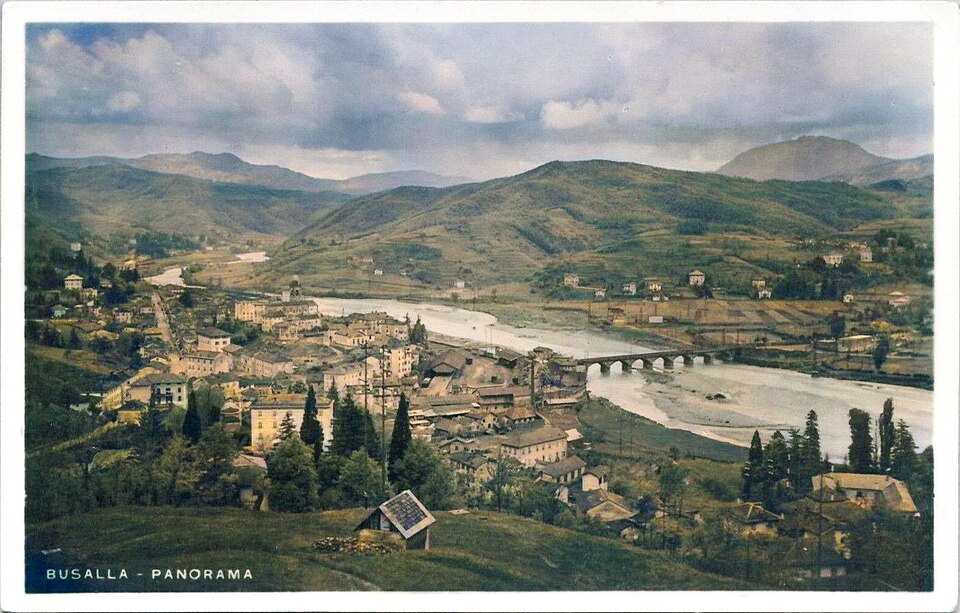
Genoa in the fifteenth century was one of the richest cities in Europe. It was a republic run by merchants, not a kingdom run by a king, and its ships traded across the Mediterranean and the Black Sea — grain, wine, cloth, spices, and slaves. The city's great families, names like Spinola, Centurione, and Di Negro, owned fleets and counting houses from Chios in the Aegean to the ports of Spain. A boy growing up in Genoa learned early that the sea was where fortunes were made, and that a man with no land and no title could still rise if he understood ships, winds, and markets.
Columbus's father, Domenico Colombo, was a middle-class wool weaver who worked in Genoa and Savona and owned a cheese stand at which young Christopher worked as a helper. The family was respectable but not wealthy, and Christopher's formal education was limited. He learned to read Latin and write Castilian only later in life, and he probably never wrote in his native Genoese dialect. He had three brothers — Bartholomew, Giovanni Pellegrino, and Giacomo (called Diego in Spanish) — and a sister, Bianchinetta. Of the brothers, Bartholomew mattered most to the story: he became a cartographer, and his map workshop in Lisbon would later become a partner in Columbus's great plan.
In 1470 the family moved to Savona, about 40 kilometres west of Genoa, where Domenico took over a tavern. That same year, Christopher was already at sea on a Genoese ship hired in the service of René of Anjou, who was trying to conquer the Kingdom of Naples. He was about nineteen. Over the next few years he sailed the Mediterranean on merchant vessels, travelling as far east as the Aegean island of Chios, where the Genoese held a trading post. In 1473 he began an apprenticeship as a business agent for the Spinola, Centurione, and Di Negro families — the kind of job that taught a young man how trade worked, who owed whom, and how a voyage was financed.
Shipwreck and a new life in Portugal
The turning point of Columbus's young life came in August 1476. He was sailing on a Genoese trading fleet through the Strait of Gibraltar when the fleet was attacked off Cape St. Vincent by French and Portuguese vessels. His ship sank. Columbus swam ashore on the coast of Lagos, in southern Portugal, and made his way to Lisbon, where his brother Bartholomew was already living and working as a mapmaker. He was twenty-five years old, shipwrecked, and far from home — and he stayed.
Lisbon in the 1470s was the most exciting port in Europe. Under Prince Henry the Navigator and then King John II, Portuguese ships were pushing down the west coast of Africa year by year, looking for gold and for a sea route around Africa to India. Lisbon was full of Italian merchants, German mapmakers, and African and Atlantic knowledge that existed nowhere else. Columbus based himself there from 1477 to 1485, trading for the Centurione family, sailing with Portuguese ships, and learning everything he could about the Atlantic. In the autumn of 1477 he sailed on a Portuguese ship from Galway, in Ireland, back to Lisbon. He later claimed to have sailed to Iceland as well, though historians are not sure this is true. Between 1482 and 1485 he traded along the coast of West Africa, reaching the Portuguese trading post of Elmina on the Guinea coast, in what is now Ghana — the farthest south he ever sailed.
It was in Lisbon that the idea that would define his life took shape. Portuguese sailors knew the Atlantic winds and currents better than anyone, and Lisbon's mapmakers debated the size of the world. Columbus began to collect the books, maps, and stories that would become his case for sailing west: Ptolemy's Geography, Marco Polo's travels, the letters of the Florentine cosmographer Paolo Toscanelli, and the reports of sailors who said they had seen driftwood and strange objects carried in from the west.
Marriage, family, and the move to Spain
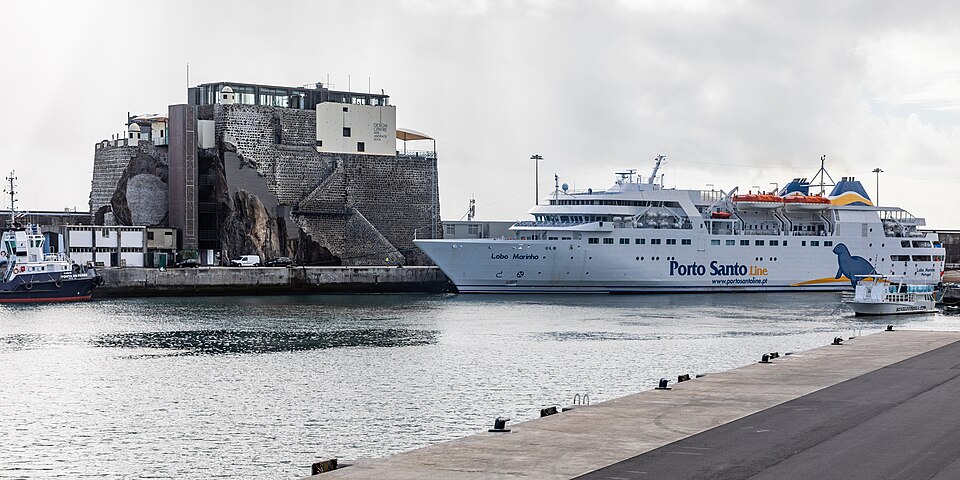
In 1479 Columbus married Filipa Moniz Perestrelo, a Portuguese noblewoman whose father, Bartolomeu Perestrelo, had been the hereditary governor of Porto Santo, a small island in the Madeira group. The marriage gave Columbus connections to the Portuguese court, ties to Madeira and Porto Santo, and at least some wealth. Filipa's mother showed Columbus documents her late husband had written or collected about possible western lands in the Atlantic, and these probably helped start him thinking about a voyage of investigation. The couple lived first in Lisbon and then on Porto Santo, where their son Diego was born in 1479 or 1480. Filipa died around 1484 or 1485, while Columbus was away in Castile.
After her death Columbus returned to Portugal to settle her estate, collected his young son Diego, and left for Spain in 1485. He was thirty-four, a widower with a small child, and he carried with him a plan that Portugal had already rejected. In Spain he found a mistress in 1487, Beatriz Enríquez de Arana, a twenty-year-old orphan of Córdoba, who gave birth to his second son, Fernando, in 1488. He never married her, though he provided for her in his will and had the boy legitimized, as Castilian law allowed. Fernando would grow up to become his father's biographer, and his Life of the Admiral is one of the most important sources for Columbus's life — though historians read it carefully, because a son writing about his father is not a neutral witness.
The question of where he came from
Over the centuries, writers have claimed Columbus for many countries — Spain, Portugal, even Poland and Greece have had their champions. The scholarly consensus, however, is that he was born in the Republic of Genoa, and the archives of Genoa support it: documents from 1479 record a Cristoforo Colombo of Genoa giving testimony in a lawsuit there, and the family records match. The competing theories have been examined and discounted by most historians. What matters more than the birthplace is what Genoa gave him: a merchant's eye for profit, a sailor's knowledge of the Mediterranean, and a willingness to gamble everything on a voyage. He was, in the end, a Genoese sailor who became a Spanish admiral — and that double identity, Italian by birth and Spanish by service, is one reason his legacy is claimed by so many countries today.
| Date | What happened |
|---|---|
| 1451 | Born in Genoa, between 25 August and 31 October, to Domenico Colombo and Susanna Fontanarossa |
| 1470 | Family moves to Savona; Columbus sails in the service of René of Anjou |
| 1473 | Apprenticeship as business agent for the Spinola, Centurione, and Di Negro families |
| 1476 | Shipwrecked off Lagos, Portugal; swims ashore and settles in Lisbon |
| 1477 | Sails from Galway, Ireland, to Lisbon; joins his brother Bartholomew |
| 1479 | Marries Filipa Moniz Perestrelo; son Diego born 1479 or 1480 |
| 1482–85 | Trades along the West African coast as far as Elmina, Guinea |
| 1485 | Filipa dies; Columbus leaves Portugal for Spain with young Diego |
| 1488 | Second son, Fernando, born to Beatriz Enríquez de Arana in Córdoba |
Sources: Encyclopaedia Britannica, “Christopher Columbus”; Encyclopedia.com; Wikipedia, “Christopher Columbus”; New World Encyclopedia, “Christopher Columbus.” Checked 29 November 2026.