The Second Voyage, 1493–96: Seventeen Ships and a Colony
The first voyage had been an exploration. The second was a conquest. Seven months after Columbus returned to Spain, he sailed again — this time with seventeen ships, twelve hundred to fifteen hundred men, horses, cattle, seeds, sugarcane, and five priests. The aim was no longer to find Asia but to take possession of it: to build a colony, convert its people, and send gold home. The fleet found the men of La Navidad dead, built a new town that failed, and set in motion the systems of forced labour that would destroy the Taíno within a generation.
In short
Columbus sailed from Cádiz on 25 September 1493 with 17 ships and 1,200–1,500 people — soldiers, artisans, gentlemen, and five priests — carrying horses, cattle, sheep, seeds, tools, and sugarcane cuttings. He sighted Dominica, Guadeloupe, and Puerto Rico, then found La Navidad destroyed and its garrison dead. He founded La Isabela on the north coast of Hispaniola on 2 January 1494, the first planned European settlement in the Americas. The town failed, hurricanes wrecked its ships, and Columbus returned to Spain in June 1496, leaving his brother Bartolomé in charge. Bartolomé founded Santo Domingo later that year.
A fleet for settlement
The scale of the second voyage shows how quickly the first voyage changed Spanish thinking. Columbus returned in March 1493 with gold, parrots, and captive Taíno, and the court was convinced that a rapid, much larger follow-up was worth funding. The pope had granted Spain title to the new lands, Portugal was negotiating for its share, and the Crown wanted possession — real towns, real settlers, real gold — before anyone else could claim the islands. The fleet that sailed from Cádiz on 25 September 1493 was therefore not an exploring expedition but a colonising one: seventeen ships, including two naos (the flagship Maríagalante and the Gallega) and fifteen caravels, among them the Niña and the Pinta from the first voyage.
Aboard were between 1,200 and 1,500 men, and a few women: soldiers, craftsmen, gentlemen adventurers, and five priests, whose task was to convert the Taíno to Christianity. The fleet carried horses, cattle, sheep, pigs, seeds, tools, and cuttings of sugarcane — the crop that would later dominate the Caribbean economy and drive the demand for enslaved labour. It also carried the first ship to be built in the Americas, the Santa Cruz, also called the India, which was constructed during the voyage. The message was clear: this time, Spain was coming to stay.
The road to Hispaniola
Columbus took a more southerly route than on his first voyage, and the fleet sighted land in the Lesser Antilles on 3 November 1493 — the island he named Dominica, for the Sunday on which it was found. Sailing westward, the fleet passed Marie-Galante, Guadeloupe, Nevis, St. Kitts, St. Croix, and the Virgin Islands, and reached the large island of Borinquén, which Columbus named San Juan Bautista — the island we now call Puerto Rico. The voyage was a tour of discovery in its own right: in a few weeks Columbus added a dozen islands to the Spanish map, and gave them names that are still used today.
When the fleet reached Hispaniola in late November, the news was bad. La Navidad was destroyed, and the thirty-nine men Columbus had left there were dead. The Spaniards had, in the words of one early account, "made themselves so hated in their quest of gold and women" that the Taíno chief Caonabo had attacked and killed them. The fort built from the Santa María's timbers was a ruin. Columbus's first settlement had lasted less than a year, and its fate was a warning of what was to come: the newcomers wanted gold and women, the Taíno resisted, and the result was violence on both sides.
La Isabela: the town that failed
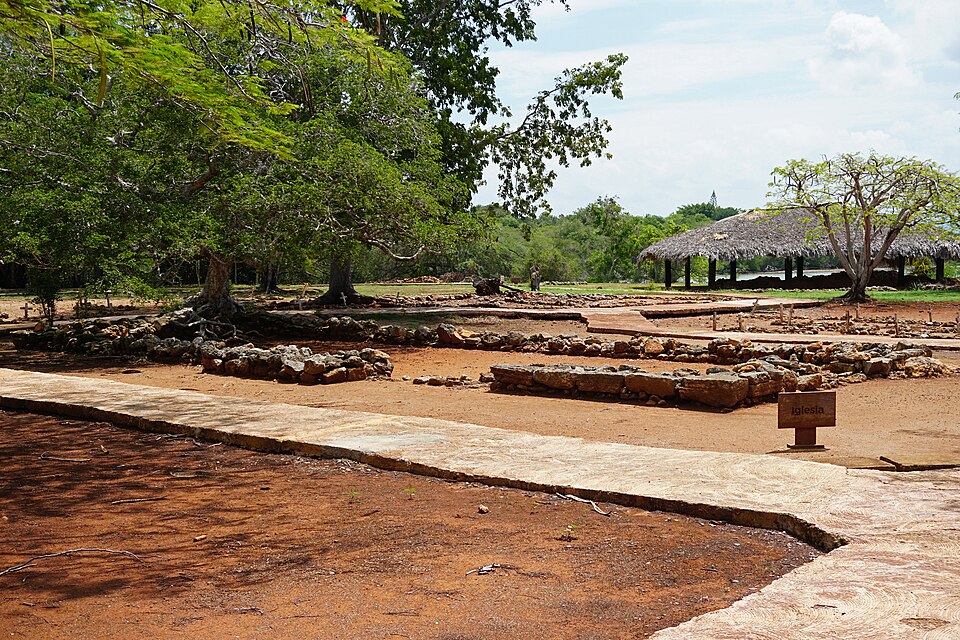
Columbus abandoned the site of La Navidad and sailed east along the north coast of Hispaniola. On 2 January 1494 he founded a new settlement at a bay he had noted during his first voyage, in what is now the Dominican Republic, about 28 miles west of present-day Puerto Plata. He named it La Isabela, in honour of Queen Isabella. It was the first planned European town in the Americas: a main square, a church, a royal palace, and two hundred huts for the settlers, laid out with the order of a Spanish town. Within four days, the settlers found gold nearby — enough to send twelve ships back to Spain laden with gold and spices.
But La Isabela was a poor choice of site, and the settlement failed quickly. The land was unhealthy, the food ran short, and the settlers — many of them gentlemen adventurers who had expected easy riches — fell sick and quarrelled. In 1494 and 1495, hurricanes struck the settlement, destroying at least eight ships, including the flagship Maríagalante, the nao Gallega, and the caravels Cardera and San Juan. Columbus left the colony in the care of a council headed by his brother Diego and sailed off to explore Jamaica and the southern coast of Cuba, which he insisted was the Asian mainland — even making his men swear an oath that Cuba was a continent. When he returned, he found the colony in disorder and the Taíno in revolt against forced labour and abuse.
The response was brutal. Columbus imposed a system of tribute: every Taíno over the age of fourteen was required to deliver a regular quantity of gold, and those who failed were punished — by some accounts with mutilation. In 1495 he shipped about 500 Taíno captives to Spain as slaves, and about 200 of them died on the crossing. The enslavement of Indigenous people was controversial even at the time: Queen Isabella objected, and the trade was later restricted. But the pattern was set. The colony needed gold, the Taíno were made to provide it, and those who resisted were killed or enslaved.
Santo Domingo, and the return home
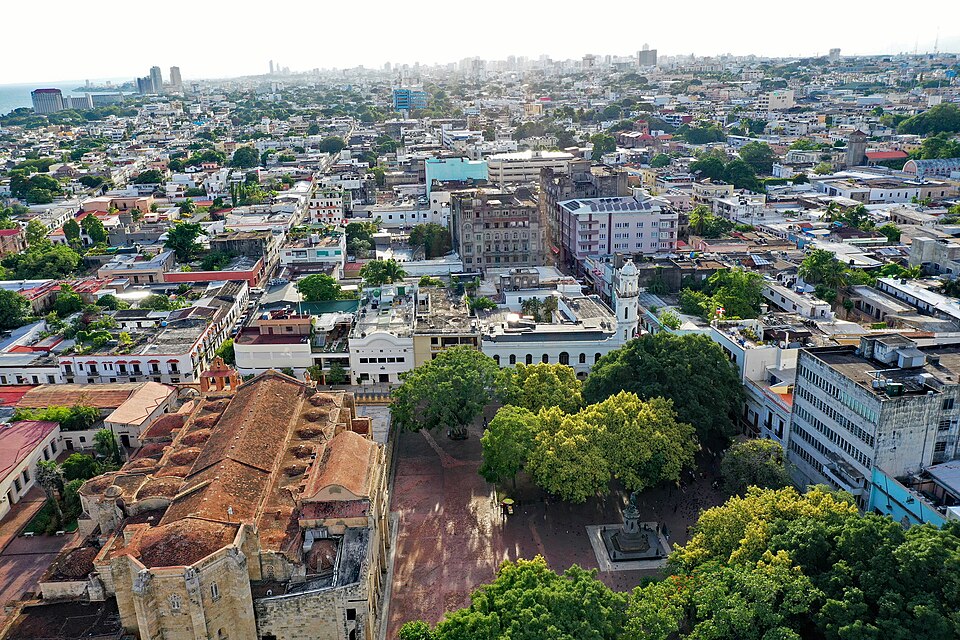
Columbus decided to return to Spain in 1496 to answer the complaints against his rule and to ask for reinforcements. He left his brother Bartolomé in charge, and sailed for Europe on 10 March 1496, arriving in June. While he was gone, Bartolomé abandoned La Isabela and moved the Spanish headquarters to the south side of the island, founding the city of Santo Domingo on the Ozama River. La Isabela was abandoned by 1498. Santo Domingo lived on, and today it is the capital of the Dominican Republic and the oldest continuously inhabited European city in the Americas.
The second voyage had achieved a great deal on paper: a dozen new islands, a colony founded, gold sent home, and the beginnings of a Spanish empire. But it had also revealed the problems that would destroy Columbus as a governor. The colony was expensive, the gold was less than promised, the settlers were unhappy, and the treatment of the Taíno was already drawing criticism in Spain. Columbus had proved he could find lands; he had not proved he could govern them. The third voyage would test that failure to the limit.
| Date | What happened |
|---|---|
| 25 Sep 1493 | Fleet of 17 ships sails from Cádiz with 1,200–1,500 people |
| 3 Nov 1493 | Dominica sighted in the Lesser Antilles |
| Nov 1493 | La Navidad found destroyed; garrison dead |
| 2 Jan 1494 | La Isabela founded on the north coast of Hispaniola |
| 1494–95 | Hurricanes wreck eight or more ships at La Isabela |
| 1495 | About 500 Taíno shipped to Spain as slaves; about 200 die on the crossing |
| 10 Mar 1496 | Columbus sails for Spain |
| 1496 | Bartolomé Columbus founds Santo Domingo |
| 1498 | La Isabela abandoned |
Sources: EBSCO Research Starters, “Columbus's Voyages”; Encyclopedia.com, “Columbus, Christopher”; National Humanities Center, “Columbus Establishes the Town of Isabella”; Ships of Discovery, “1493–1496”; BYU Religious Studies Center, “Later Voyages: Columbus as Governor.” Checked 29 November 2026.