The First Voyage, 1492: Seventy Days to a New World
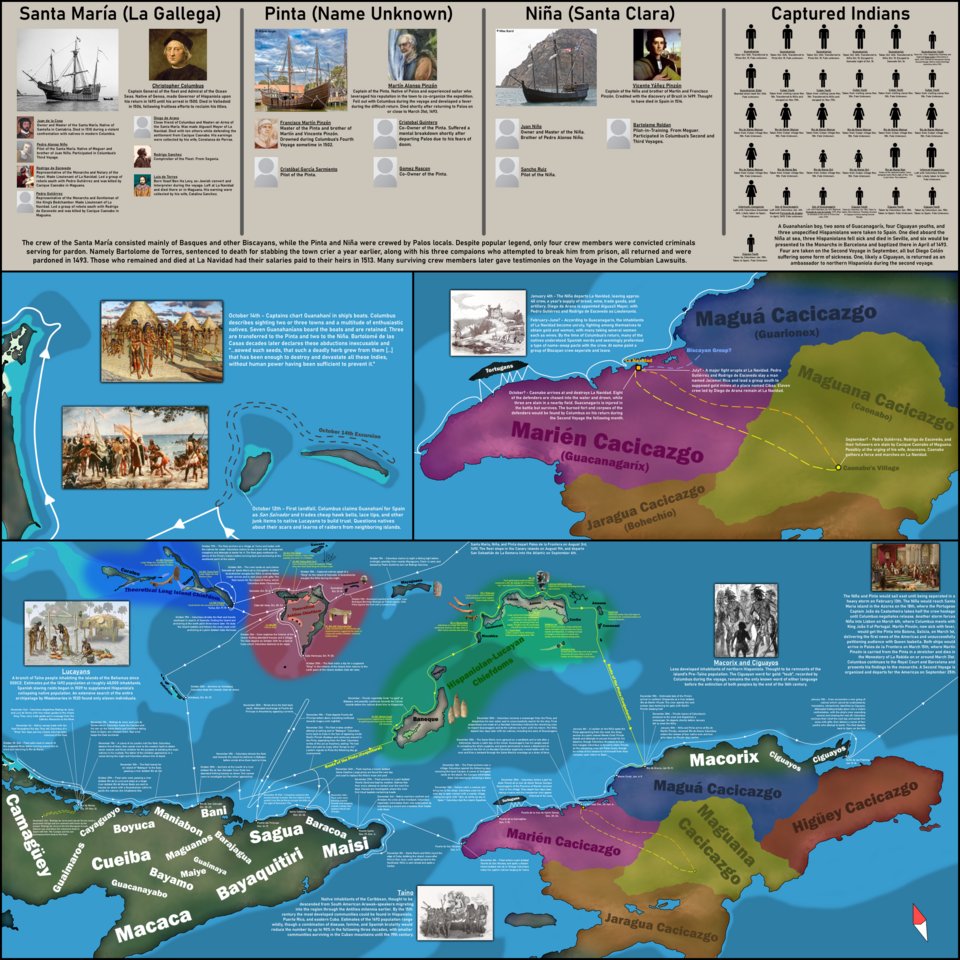
On the morning of 3 August 1492, half an hour before sunrise, three small ships slipped out of the port of Palos on the morning tide. Seventy days later, at two in the morning on 12 October, a lookout on the Pinta shouted that he saw land. In between lay five weeks of open ocean, a crew growing afraid, a course change that saved the voyage, and a landing on an island whose people called it Guanahani. Columbus believed he had reached Asia. He had, in fact, reached a world no European knew existed.
In short
Columbus left Palos on 3 August 1492 with the Niña, the Pinta, and the Santa María and about 90 men. After repairs in the Canary Islands, the fleet left La Gomera on 6 September and sailed west for 36 days. Land was sighted on 12 October 1492 on an island in the Bahamas, which Columbus named San Salvador. He went on to Cuba (28 October) and Hispaniola (5 December), where the Santa María was wrecked on Christmas Day and 39 men were left at the fort of La Navidad. He returned to Palos on 15 March 1493.
Departure and the Canaries
The fleet left Palos before dawn on Friday, 3 August 1492, crossing the bar of the Saltés River on the morning tide. The first days were not smooth: the Pinta's rudder broke, and the fleet had to put in at the Canary Islands for repairs and supplies. The Canaries were then being conquered by Castile, and they were the perfect starting point for an Atlantic crossing — they sit at about 28 degrees north latitude, in the belt of the northeast trade winds that blow steadily west across the ocean. Columbus spent several weeks there, refitting the Niña with square sails and taking on water, wood, and food. On 6 September the fleet left La Gomera and turned due west, into an ocean no European ship had ever crossed. Behind them lay the last land they would see for five weeks.
The crossing was, by the standards of the time, a good one. The trade winds were steady, the seas were calm, and the ships made steady progress west. But as the days passed with no land in sight, the crew grew fearful. They had sailed beyond the point where Columbus's own calculations said land should appear, and they began to demand that he turn back. Columbus, according to his journal, kept two logs: one true account of the distance sailed, and one understated version shown to the crew, to keep them from knowing how far from home they really were. Whether he actually kept two logs is debated, but the story captures the tension of the voyage: a captain who believed land was near, and a crew who feared they would sail on until their water ran out and they died in an empty sea.
Landfall
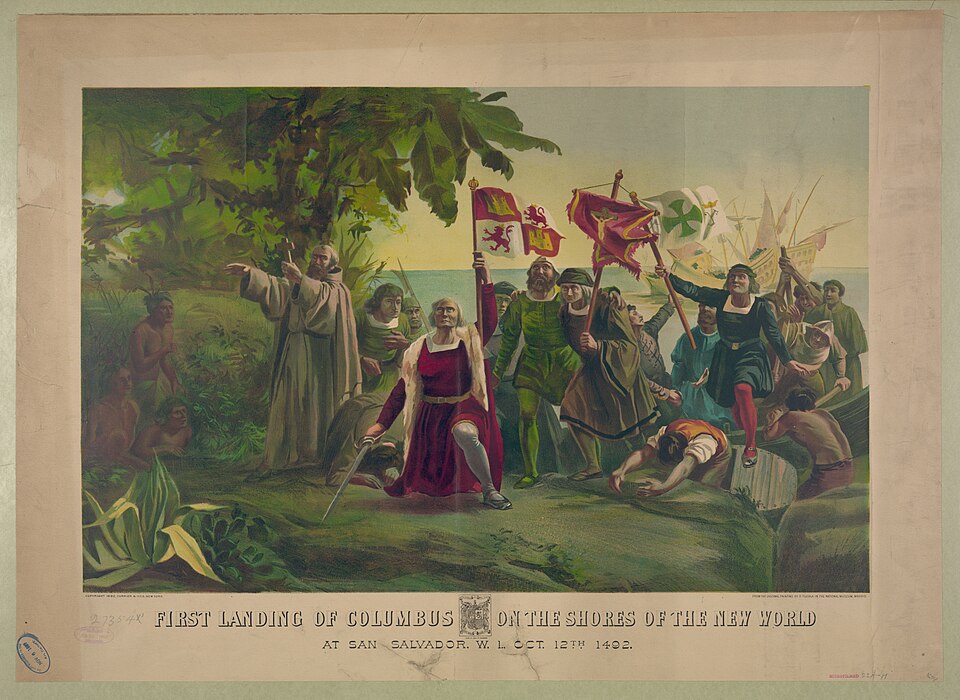
On 7 October, after five weeks at sea, the ships changed course to the southwest, following the flight of birds — a sign, Columbus believed, that land lay in that direction. The change probably saved the voyage: had they continued due west, they would have reached Florida or missed the Bahamas entirely. On the evening of 11 October, Columbus thought he saw a light in the distance. At two in the morning on 12 October, Rodrigo de Triana, the lookout on the Pinta, shouted "Tierra!" — land. At dawn, Columbus rowed ashore with the royal banner, knelt on the sand, and took possession of the island in the name of Ferdinand and Isabella, naming it San Salvador, the Holy Saviour.
The island's people, the Taíno, called it Guanahani. They came out to meet the strangers with gifts of parrots, cotton thread, and small ornaments, and Columbus's journal describes them as friendly, generous, and well-built, with no iron weapons and no knowledge of European ways. Columbus believed he had reached the outskirts of Asia — the islands off the coast of Cipangu — and so he called the people he met "Indians", a name that would stick for centuries. He noted in his journal that they would make good servants and good Christians, and that fifty men could subjugate the whole island. The words are chilling to read today, and they show that the idea of conquest was present from the first day.
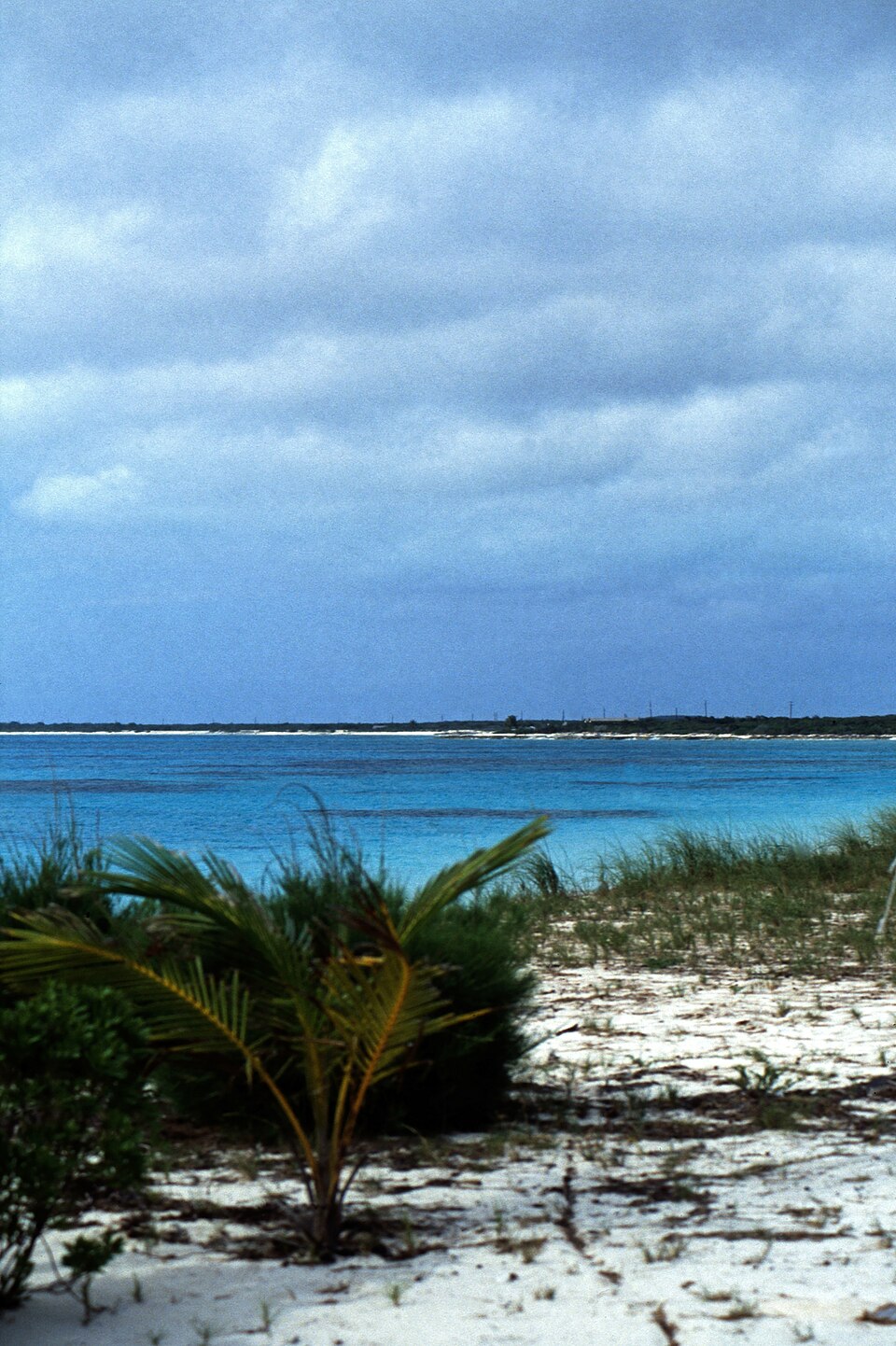
Exactly which island Columbus landed on is still debated. San Salvador Island in the Bahamas — also known as Watling Island — is the most commonly accepted candidate, but historians have argued for several others, including Samana Cay and Grand Turk. The debate turns on careful reading of Columbus's journal, the distances he recorded, and the descriptions of the island. What is not debated is the date, 12 October 1492, which is still marked every year in the United States as Columbus Day and in many other places as the Day of the Race or Indigenous Peoples' Day.
Cuba, Hispaniola, and the wreck
Columbus did not stay in the Bahamas. He sailed on, looking for the mainland of Asia and for gold. On 28 October he reached Cuba, which he thought might be the Asian mainland, and explored its northern coast. On 5 December he reached Hispaniola, the large island shared today by Haiti and the Dominican Republic, where he found more gold — small ornaments worn by the Taíno — and decided this was a land worth holding. He sailed along its northern coast, trading with the Taíno and noting the fine harbours and fertile land.
On Christmas Day 1492, the Santa María ran aground on a reef off the north coast of Hispaniola. The crew was tired, the ship was being steered by a boy while the helmsman slept, and despite every effort the flagship could not be freed. Columbus had her stripped of her timbers and used them to build a small fort, La Navidad — the Nativity, named for Christmas Day — where he left thirty-nine men under the command of Diego de Arana, with orders to trade for gold and to treat the Taíno well. It was the first European settlement in the Americas, and it would not survive the year.
On 6 January 1493, Columbus met the Pinta again — Martín Alonso Pinzón had separated from the fleet weeks earlier to search for gold on his own — and on 16 January he began the return voyage from Samaná Bay in the Niña. The crossing home was harder than the crossing out: in February a great storm in the Atlantic nearly sank the Niña, and Columbus, fearing the ship would be lost and no one would know of his discovery, wrote an account of the voyage, sealed it in a barrel, and threw it into the sea. The barrel was never found, but the ship survived. The Niña reached Lisbon on 4 March, where Columbus reported to King John II of Portugal, and then sailed on to Palos, arriving on 15 March 1493 — a few hours ahead of the Pinta, which had reached Bayona in Galicia. The first voyage had taken seven and a half months. Columbus returned a celebrity, carrying gold, parrots, and several captive Taíno, to show the monarchs what he had found.
| Date | What happened |
|---|---|
| 3 Aug 1492 | Fleet sails from Palos with three ships and about 90 men |
| 6 Sep 1492 | Leaves La Gomera, Canary Islands, and turns west |
| 7 Oct 1492 | Course changed to the southwest, following birds |
| 12 Oct 1492 | Landfall in the Bahamas; island named San Salvador |
| 28 Oct 1492 | Reaches Cuba |
| 5 Dec 1492 | Reaches Hispaniola |
| 25 Dec 1492 | Santa María wrecked; La Navidad fort built; 39 men left |
| 16 Jan 1493 | Return voyage begins from Samaná Bay |
| 4 Mar 1493 | Niña reaches Lisbon |
| 15 Mar 1493 | Niña reaches Palos; first voyage ends |
Sources: White House, “Sail On: Columbus Day”; Encyclopedia.com, “Columbus, Christopher”; Historian.info, “Columbus Sets Sail from Palos”; Borders of Time, “Voyages of Christopher Columbus”; Gradesaver, “Christopher Columbus: Journal and Selected Writings.” Checked 29 November 2026.