The Third Voyage, 1498–1500: The Mainland, the Rebellion, and the Chains
The third voyage gave Columbus his greatest geographical discovery and his greatest humiliation. In 1498 he reached the mainland of South America — the first European of his era to do so — and realised from the vast flow of the Orinoco River that he had found an enormous landmass. But when he returned to Hispaniola he found the colony in rebellion, and two years later the Crown's investigator arrested him and his brothers, put them in chains, and shipped them back to Spain. He was released, but he never governed again.
In short
Columbus sailed from Sanlúcar de Barrameda on 30 May 1498 with six ships, about 300 men, and 30 women colonists. He sailed south to the Cape Verde Islands, then west, reaching Trinidad on 31 July 1498 and the coast of Venezuela in August — the first European encounter with the South American mainland. He returned to Hispaniola on 19 August to find the colony in civil war. In 1500 Francisco de Bobadilla, sent by the monarchs to investigate, arrested Columbus and his brothers and sent them home in chains in December 1500. The monarchs released him but did not restore his governorship.
South to the mainland
It took Columbus two years to win a third voyage. After his return in 1496, most Spaniards were disappointed with the financial returns from the colony, and the monarchs were slow to provide further support. When permission finally came, the expedition was modest: six ships — three for exploration and three to carry provisions to Hispaniola — with about 300 men and 30 women as additional colonists, including ten pardoned criminals. Columbus departed from Sanlúcar de Barrameda on 30 May 1498, taking his three exploration ships south to the Cape Verde Islands before heading west — a more southerly route than before, designed to test whether the lands south of the Caribbean held more gold.
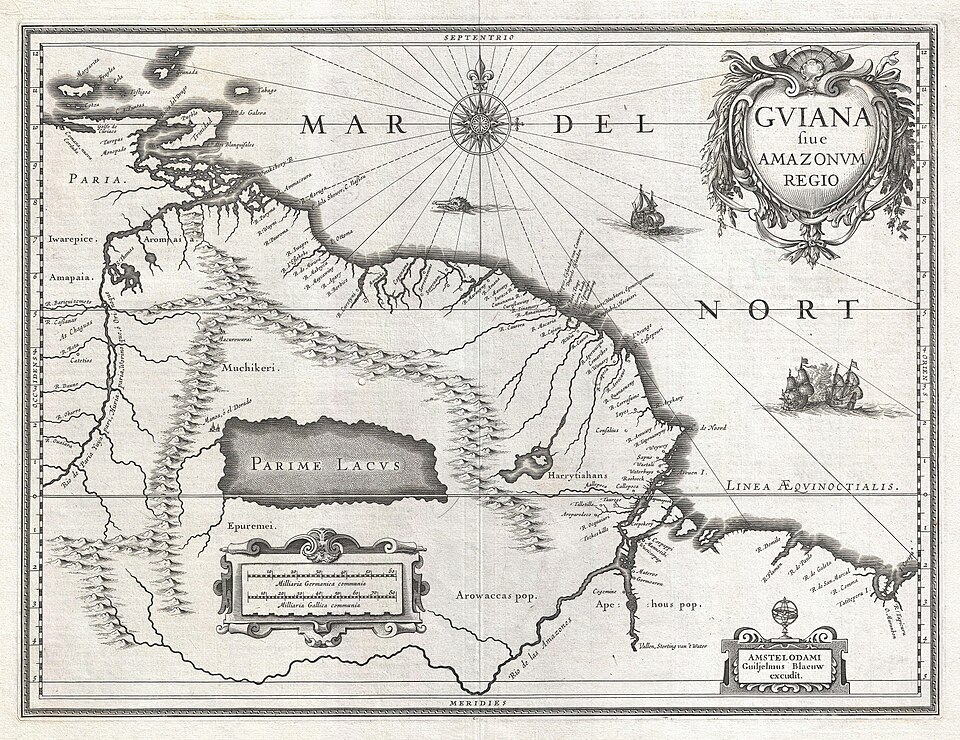
On 31 July 1498 the fleet reached the island of Trinidad, off the coast of South America. From 4 to 12 August, Columbus explored the Gulf of Paria, the strait that separates Trinidad from Venezuela, and then sailed along the Venezuelan coast as far as Margarita Island. He saw the vast outflow of fresh water from the Orinoco River pouring into the sea, and he understood what it meant: so great a river could only come from a vast landmass. He wrote to the monarchs that he had found an enormous continent — but he fitted it into his old geography, suggesting that it might be near the Garden of Eden described in the Bible, and that the Earth was pear-shaped, bulging out towards the heavens. He had, in effect, discovered South America and still refused to accept that it was not Asia.
He also named the islands he passed — Tobago, which he called Bella Forma, and Grenada, which he called Concepción — and he took note of the pearls of Margarita Island, which would soon draw a rush of Spanish fortune-hunters. The young Bartolomé de las Casas sailed on this voyage, and his later writings — including his partial transcripts of Columbus's logs — are among the most important sources for the voyages. Las Casas would become the most famous critic of Spanish treatment of Indigenous peoples, and his accounts of what he saw on Hispaniola are the main reason we know as much as we do about the colony's cruelty.
A colony in rebellion
Columbus returned to Hispaniola on 19 August 1498 to find the situation in crisis. His brother Bartolomé had moved the main settlement from La Isabela to Santo Domingo, but the colony was in civil war. Some of the settlers had mutinied under Francisco Roldán, a former mayor of La Isabela, who accused the Columbus brothers of harsh rule, unpaid wages, and favouritism towards their own men. The Taíno were increasingly hostile, and neither Bartolomé nor Diego Columbus had been able to maintain order. Columbus himself had little better luck: he negotiated with the rebels, made concessions, and granted land and labour to the mutineers — a settlement that bought peace at the price of handing the Taíno over to the settlers as forced workers.
Meanwhile, complaints against Columbus were piling up at the Spanish court. Returned settlers and friars accused him of mismanagement, cruelty, and incompetence. The colony was costing the Crown money and producing little gold. The monarchs, who had once given Columbus almost everything he asked for, now decided to take back control. In 1500 they sent Francisco de Bobadilla, a knight of the Order of Calatrava, to Hispaniola as royal investigator and governor, with authority to restore order and to judge Columbus's administration.
Arrested in chains
Bobadilla arrived in Santo Domingo in August 1500 and moved fast. He arrested Columbus and his brothers Diego and Bartolomé, seized their money and property, and sent them home to Spain in chains in October or November 1500, arriving in December. The image of the Admiral of the Ocean Sea in irons, shipped home like a common criminal, is one of the most famous in the history of exploration — and Columbus made sure it was remembered. He kept the chains, by some accounts, and asked to be buried with them. He wore them as proof of his mistreatment, and he never forgave the monarchs for allowing it.
When he arrived in Spain, Ferdinand and Isabella received him with affection and assured him of his rights. They ordered Bobadilla to return his property, and they sent a new governor, Nicolás de Ovando, to Hispaniola. But they did not restore Columbus's governorship, and they never gave him back his authority. He was allowed to keep his titles — Admiral of the Ocean Sea, Viceroy — but the titles were thereafter empty of power. The contract of Santa Fe, which had made him a partner of the Crown, had been set aside in practice, and the Crown would govern the Indies directly from then on. Columbus spent the next two years petitioning for reinstatement and for the profits he believed he was owed, and in March 1502 the monarchs finally granted him one more voyage — not as governor, but as an explorer, with four small ships and orders not to land at Hispaniola.
| Date | What happened |
|---|---|
| 30 May 1498 | Third voyage sails from Sanlúcar with six ships |
| 31 Jul 1498 | Trinidad reached |
| 1–12 Aug 1498 | Gulf of Paria and Venezuelan coast explored; Orinoco reached |
| 19 Aug 1498 | Columbus returns to Hispaniola; colony in rebellion |
| 1500 | Bobadilla sent to investigate; arrests Columbus and brothers |
| Dec 1500 | Columbus shipped home in chains |
| 1501 | Released by the monarchs; governorship not restored |
| Mar 1502 | Permission granted for a fourth voyage |
Sources: Encyclopedia.com, “Columbus, Christopher (c. 1451–1506)”; EBSCO Research Starters, “Columbus's Voyages”; New World Encyclopedia, “Christopher Columbus”; Encyclopedia of World History via FlyLib, “The Voyages of Columbus, 1492–1504.” Checked 29 November 2026.